

Podcast: Play in new window | Download
Healing Sexual Sin & Shame through the Cross (and Curiosity): Interview with Jay Stringer
There is something so incredible about a story of redemption. And, dear reader, I believe this conversation will be a turning point for you, as it has been for so many in our community.
I’ve walked alongside men and women wrestling with the deep pain of sexual brokenness- the battles they face in their marriage beds, their thought lives, their past, and the weight of shame. I’ve seen firsthand the power of God to restore what seemed utterly lost. And this conversation with Jay Stringer is an invitation to that very healing journey.
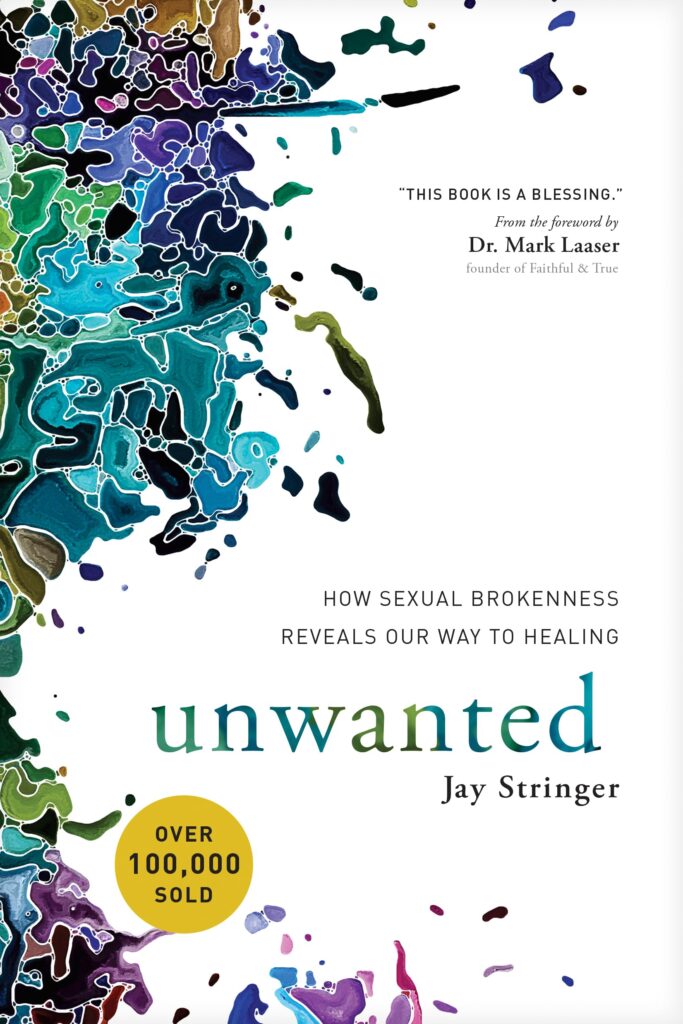
Jay is a therapist, minister, researcher, and author of Unwanted: How Sexual Brokenness Reveals Our Way to Healing. His compassionate, curious approach offers a fresh lens: that the very behaviors we hate are not random. They are clues. And they point us to healing.
On this Good Friday, as we reflect on the sacrifice of Jesus, there is no better time to consider what it truly means to lay our shame at the foot of the cross.
Let’s dive in.
The Cross and Your Story of Healing
We all carry wounds. Some we’re acutely aware of, and others we’ve buried so deeply that they show up in our actions long before we recognize them in our hearts.
Jay opened our conversation by pointing us to the profound truth of the cross. Jesus knew exactly what you would do. Every mistake. Every moment of shame. And yet, He chose to take it all upon Himself. He bore your sin and your shame.
This is not a journey of trying harder to be good enough. It’s about understanding how deeply Jesus loves you, even in your lowest moments, and choosing to respond to His love with a courageous step toward healing.

Unwanted Behaviors Are Not Random
One of the most freeing truths Jay shared is this: our unwanted behaviors are not random.
Through his extensive clinical work and groundbreaking research, Jay discovered that the specific ways we struggle are deeply connected to our stories of origin.
Jay explained that in his role as the sex addiction therapist for the city of Seattle, he began to see patterns. Men arrested for soliciting sex were not making random choices. Their actions were connected to predictable stories of pain and trauma.
Whether you grew up in a home of neglect, where your heart longed for connection and was left empty, or in a home of rigid control, where you felt powerless and unseen, these early experiences shape the way you cope and the behaviors you pursue as an adult.
Your brain, your body, your desires are all responding to unhealed wounds.
Jay Stringer on Understanding the Root: Family Systems and the Power of Priming
Jay described two primary family systems that often set the stage for future struggles:
- The Disengaged Family System:
- Parents were physically or emotionally absent.
- Your longing for connection was never fulfilled.
- When you first experienced the neurochemical bond of pornography or sex, it felt like the deepest connection you had ever known.
- The Rigid, Authoritarian Family System:
- Parents were hyper-controlling, using performance or religion to shape you.
- You felt powerless and suffocated.
- Pornography, in contrast, offered a false sense of control and power over your environment.
Both systems prime you for certain temptations. And recognizing this isn’t about blaming parents or excusing behaviors. It’s about gaining understanding.
Because understanding is what allows us to grieve. And grieving opens the door to healing. As Jay says, “You can’t just try to stop an unhealthy behavior. You have to understand why you were drawn to that behavior in the first place.”

Shame Keeps You Stuck But Curiosity Sets You Free
As Christians, we know the seriousness of sin. But too often, we try to hate our way to holiness. We believe that if we punish ourselves enough, we’ll finally change.
But, the Apostle Paul tells us that it is God’s kindness that leads us to repentance (Romans 2:4). Not our contempt. Not our loathing. Not our self-hatred.
Jay encouraged us to replace self-contempt with curiosity.
Ask yourself:
- Why am I drawn to this behavior?
- What is the pain underneath my actions?
- What does this reveal about my longing to be seen, known, and loved?
When we approach our story with curiosity, we give God space to reveal the roots of our pain.
The Shark of Shame: Swim Toward It
Jay also shared a fascinating metaphor that I just love:
Professional shark diver Andy Casagrande was once asked what to do if a great white shark is swimming toward you. His answer? Swim toward it.
If you swim away, you act like prey. But if you move toward the shark, it confuses the predator, and it backs away.
Shame operates the same way. When we run from it, it devours us. But when we confront it — facing it head on, sharing vulnerably in trusted community, seeking counseling, and naming our wounds — we rob shame of its power.
Swim toward the shark of shame.
Face it. Name it. And watch as it loses its grip on your life.

Jesus Took Your Shame to the Cross
This is where our faith becomes not just helpful, but essential.
The world offers coping strategies, but Jesus offers complete redemption. He didn’t just take your sin to the cross; He took your shame.
Through His death and resurrection, we are invited into freedom.
If you’ve ever felt like your past disqualifies you from God’s love, let me remind you: Jesus knew your struggles when He went to the cross. He went anyway. He has already made a way for you to live in righteousness, peace, and freedom.
This is the hope of Easter. The hope of the Gospel.
From Crisis to Calling: Your Story Matters
So often, the crises of our lives — the shame, the addictions, the brokenness — are actually invitations to transformation.
Jay shared that in the absence of elders to guide us through rites of passage, our souls will create crises that force us to confront our identity and our wounds.
Rather than run from the crisis, we can see it as a holy opportunity. Your struggle is not the end of your story. It’s the beginning of a new chapter.
When you engage your story with honesty and curiosity, you step into the redemption God has for you. You become part of His story of restoration — not just for you, but for others.
Final Encouragement: There Is Hope for You
Dear friend, this journey is not about perfection. It’s about progress. It’s about engaging your story with curiosity, leaning into the kindness of God, and walking the path of healing, step by step.
Jesus took your sin. He took your shame. And He rose again to give you new life.
This Easter, may you embrace the truth that resurrection is possible for you, too.
You are deeply loved. You are seen. You are not alone.
Happy Easter.
With love,
Belah & Team
 Jay Stringer is a compassionate and experienced guide, dedicated to helping both men and women find freedom from sexual brokenness and pursue the life they truly desire.
A licensed mental health counselor, award-winning author, an ordained minister, and an acclaimed international speaker, Jay provides a safe and supportive environment for individuals seeking to address unwanted sexual behavior.
You can find out more about him and his work on his website: https://jay-stringer.com/
PS – Check out Jay’s book here: Unwanted: How Sexual Brokenness Reveals Our Way to Healing
PPS – If you want to take the first step into freedom and healing your marriage, schedule a free Clarity Call with us at delightyourmarriage.com/cc
PPPS – Here is a quote from a recent graduate:
“My husband and I lived parallel lives almost our entire marriage…The only thing he wanted from me in the relationship was sex. That was the last thing I wanted to give him because I was exhausted from trying to be the super mom and head of the household. This caused a rift in our relationship…After a separation in our own home we each began our own counseling…Both of our counselors questioned if a form of sex addiction might be part of the problem. I dove into trying to learn everything I could about sex addiction. I joined a 12 step group for spouses of sex addicts. That program is about avoiding unhealthy sexual behaviors. I didn’t even know what healthy sexual behaviors were. After 4 years of marriage counseling and feeling stuck in a marriage that was barely hanging on, I discovered your program. I found hope for my marriage and began to see my husband in a different light”
Transcript:
Belah, welcome to the delight your marriage podcast. You’re joining me. Bela rose, as I dive deep into the beauty power and truths about intimacy. Learn not only the practicals, but the heart behind what making love is all about. Delight your marriage. Well, dear listener, I am thrilled to bring you a conversation that just is really important, as I’ve done this work for for 10 years now, working with men and women in the area of intimacy. And you know, there’s so much good that God does through marital intimacy, and there’s so much brokenness that all of us come to marriage with to some degree, one way or another, and what Jay shares with us is really an opportunity to look at the cross and what it has done for us. So on this Good Friday, if you’re listening to us, when this comes out, I would love for you to have the perspective of Jesus came to this earth. He took on your sin and your shame. He took it all on himself, and he knew you were going to be there. He knew you were going to do those things. He knew all of it, and yet he went to the cross to suffer on our behalf. And so because of that, we can go through the journey of healing, so not just freedom from guilt and shame, but also how. How do we actually discover righteous living. How do we become people who can do that? And what Jay shares with us on this conversation, is it, it’s a journey, and it should not be just a, you know, you know, an accountability. Did you do it? Did you not this week? It’s really a journey of discovering and healing from how you got to where you are, and what’s the reasons, what’s what’s understanding what happened to get you to a place where, where that particular sin is is prevalent for you. So Jay gives so much great insight in this in this episode, I’m really excited for you, if you’re interested in learning more about him, he gives the resources that you can follow. But for now, let’s just jump in to this episode. I’m looking forward to it. Oh my goodness, delight your marriage. Listener, I am beyond thrilled. I’m talking to Jay stringer today, who has written this phenomenal book called unwanted. And we’re going to talk more deeply about the topics there, but it has Jay. I am, I am thrilled. So, so you’re a therapist, a minister, a researcher, you can introduce yourself better than I can. But I just want to say on the outset, to let your marriage listener that Jay’s book has been freeing for so many gentlemen in our community. It’s been amazing. It’s been amazing to watch. It’s almost been like, oh my gosh, there’s hope for me too, and Jay, it’s just phenomenal. So would you mind just introducing yourself to our listener?
Speaker 1 03:17
Yes, Belah, thank you so much for having me on. It’s honor to meet you. My name is Jay. I live in New York. We moved in 2020 from Seattle out to New York City, and it has just been a very wild adjustment for us here. So I’ve been married to my wife Heather for about 15 years. We met in grad school. We both have masters in counseling psychology, and that was just something that was such a a place that we had so much conflict early on in our marriage, just as we had, I think it’s like the Dunning Kruger effect, where you it’s about new knowledge that you gain and the confidence that you have, like I am so right, and I know what I’m doing, and then it plummets pretty shortly after that, and we are in that Dunning Kruger of we understand story, we know how to interact with people, but just used it to, in many ways, bully each other. So we have gradually been getting better with that. As people who are both therapists, we have two kids still in elementary school, and yeah, just I do a lot of writing thinking on the subject of desire. So my first book looked at unwanted sexual behaviors and kind of desire problems. But the next book that I’m working on, a next body of research is just much more. I would put it as like a prequel and a sequel to unwanted of how do we understand our relationship to desire, and that desire can move us into some of the best versions of ourself, but also some of the worst versions of ourselves. So doing a pretty. Big, deep dive right now into the topic of desire. And yeah, that’s little bit of an introduction to me.
Belah Rose 05:08
So good Jay. And it was actually cool because we spent some time talking about New York City, because I’m also in New York City, and it’s wild. Not a whole lot of folks that I get to work with or speak with in this work are from New York City, because the Christian population around here is pretty low. It
Speaker 1 05:25
is smaller. And I’m always so surprised. It’s like, I always, I think I’ve heard that Brooklyn would be like the fourth largest city in America if it was cut off from New York City. So it’s just, it’s just, it’s always so surprising, both how big this city is, but also how small it is across our communities. Yeah,
Belah Rose 05:47
yeah. So good. All right, Jay, so, just so I know the book on desire. When is that coming out? I’m really curious. It will
Speaker 1 05:55
be released in spring of 2026 so don’t have an exact date yet, but about a year out, and it’s going to be with Penguin Random House. So the first book was with a Christian publisher. This one is really trying to engage the topic of desire for a general audience book, and really get into conversation with a lot of the other marriage material and experts out there, and that’s by design, is like really trying to offer a resource that’s certainly informed by my faith and the work that I have seen, but also it doesn’t cater or signal to just evangelical or Christian language, and so I’m super excited for it. Amazing,
Belah Rose 06:43
amazing. Okay, so we’ll, we’ll keep our eye out for that in 2026 so focusing on the book unwanted. I am curious why you set out to write that book and do that project originally.
Speaker 1 06:57
Yeah. So a couple things. The first would be I at the time, was working as the sex addiction therapist for the city of Seattle. So was basically working with men who had been arrested for soliciting people and prostitution in the Seattle area. And started working with a lot of these men, and then just started noticing all these recurring patterns, that this decision to buy sex, this decision to sabotage their marriage, their lives was not random, that they had a fairly predictable story that they were playing out. And yet what was getting all the attention was the bad behavior. And so that was just really intriguing to me. And then you read some other Christian books on this topic of unwanted sexual behavior, or porn or infidelity, and the way that they talk about porn, the way that they talk about any of these subjects, I would say, is not only not helpful, is very damaging to a lot of couples and marriages. So one of the best selling books basically says to husbands, if you’re trying to outgrow porn wives, you need to present your bodies as a merciful vial of methadone to them, it’s horrible. So there’s no invitation to help people to understand their story that sense of your husband really wants the real thing of porn, but if he can’t get the real thing, you’re supposed to be a bottle of methadone. So I started seeing this in my clinical practice, but then also just so many of the books that I read were, frankly, not good, helpful and damaging. And so I started just getting, like, really curious about when I’m working with a client and they are working through their relationship to porn, or their draw to a particular affair partner. I started noticing that these themes weren’t random, and that some people would seek out some types of porn and some people would seek out others. And so I decided to do some research on what is motivating people to pursue these things. Because we know the statistics that 58% of our pastors, 64% of our youth pastors, are looking at it, however many men, a third of all women. About 30% of porn users are now women, so we know that the stats are high, but we don’t necessarily know like, why are people drawn not just to porn, but to the specifics of what they’re drawn to? So I did a pretty comprehensive research study that looked at basically people’s family of origin, their relationships to their mothers, fathers, formative experiences like abuse and trauma and bullying. And then I looked at their present day life. So were they depressed? Were they anxious? How were their relationships? And then, as one of my friends said, when he took the survey, he said that was one of the most invasive survey questions. Yes, just because I started asking people like, what do you actually put into Google? What do you search for? And so I had a team at New York University handle all the analytics, because I don’t have a PhD, not qualified to do all that. And we just put all that together and said, basically, what can we learn? And the thesis of unwanted and my work is that unwanted sexual behavior is not random, it’s a road map to healing and growth. And so that’s what I want people to understand more than anything in this work, is that the sexual problems that we face as individuals and couples are not random, but they are really intended to invite us to healing and to growth, but that is in many ways diametrically opposed to what we so often experience in the church, which is get into accountability, get some internet monitor on your computer and just stop this thing. And one of my friends when I was writing my last book, he said, Jay, when I have been having the same conversation with my accountability partner for 15 years, something isn’t working. And so all of that was like, we have to change the conversation on this topic. We have to do it for individuals that are stuck in shame. We have to do it for couples that are experiencing all the debris of this behavior. We’ve got to do better. And so that was my attempt to be curious about sin and unwanted behaviors, but also see how can the very problems of our life really offer people a roadmap to the healing and growth that they long for. That’s
Belah Rose 11:42
powerful, that is powerful. So I think it’s interesting. I love that you’re saying the word curious, because that’s a huge, hugely different perspective on looking at sexual sin and saying, I wonder why? I wonder what’s going on there, what, what’s happening. Because we know scripture. I was just reading this morning in Romans. I do the sin I hate. I do what I hate doing. I don’t, I don’t do what I want to do. And that’s even Paul talking. I’m just curious, from your perspective, why the church has gotten it so wrong and and harmful in your experience. What do you think?
Speaker 1 12:18
Yeah, I mean, desire is such a realm of life that we don’t know what to do with. In the church, it’s often it’s inevitably going to lead to selfishness. It’s going to lead to entitlement. And scripture, in some ways, can feel really confusing, where, on one hand, God wants to give us the desires of our hearts, but then also, desire is deceitfully wicked, and our hearts are deceitfully wicked. So that sense of what am I supposed to do with desire is one of the most beautiful dimensions of our life, but I also it could get out of control really fast. And so then what ends up happening is we try and contain it, and we just want to not be curious about why we do what we do. We go back to just a black and white thinking of this is exactly what we need to do, and that always appeals to us. Anytime we make a split between this is good and this is bad, psychologically and spiritually, that’s so much easier than being curious. But when we go back to so much, especially in the Old Testament. It there’s always the sense of when God arrives and the angel of the Lord arrives. There’s so often a place of curiosity. So to Adam, after he has just sinned and eaten of the fruit that he was commanded not to eat from God, basically says, Where are you? And to Jacob, who’s been struggling his entire life with identity and is just a deceiver. But what is the angel of the Lord ask of him, What is your name? It’s it asks a question that is intended to get him thinking about, what’s the origin story of your name as heel grabber, and how has that name, heel grabber been part of your entire life in terms of your grabs for birthright, but then also to Hagar, who has been immensely traumatized by the first family of our faith, the angel of the Lord finds her out in the desert where she’s likely going to die, and says, Where do you come from and where are you going? And so to me, if we are really understanding the gospel, God knows, in many ways, the answers to these questions, but God is asking questions to invite us to deeper engagement with the wars inside of our own hearts, with our longings, with our desires, with where we come from, and so I think that’s far more what God is committed to is not to just get the conformity of our behavior, but really to have us grapple with our story, with regard to why is it that we want things that end up sabotaging our lives? So. It was that true all along. And so I think in our honest wrestling with our story, with our motivations, with our sin, we learn so much about our story, and the more that we learn about our story, the more we have a sense of what our calling, what our kingdom, what our ultimate desires are pointing towards. But if you’re just trying to conform your behavior and get spiritually right and live righteously, you so often bypass a good story in the process.
Belah Rose 15:34
Well, I think that’s really, really powerful, because even Jesus literally asked 300 times more questions than he answered, which is nonsense, because that seems so, so wasteful. It I mean, Jesus had a lot to accomplish in three years. Why would he waste all this time asking questions, except that he wanted us, as you said, to wrestle with these things. Why? Why was he asking in the way that he was teaching. He was teaching through letting you process. And the funny thing is, Jesus knew the answers. He knew what was going on in their hearts. It was us that he wanted to ask and find out and all of that. So I think that’s fascinating. So just not trying to conform. So tell me if you would when you are working with these men that that were doing this unwanted behavior, what would you find? Maybe, what were some of the surprising elements of that?
Speaker 1 16:30
Yeah, so I think part of what we all have to deal with is our family history. So in many ways, this is the psychological category of priming that when someone pursues an unwanted sexual behavior like porn, not all of those choices are similar, depending on where you come from and what your story has been it. This is way too easy of a analysis, but let’s say that there are a couple different types of family systems, and let’s just use two for right now. For clarity sake, let’s say that you grew up in a very disengaged family system, like you had a dad that worked all the time, a mom that was like, Yeah, worked all the time, or they both cared about how, you know, the house looked far more than how your heart and soul were they just didn’t delight at all in terms of your life. They weren’t waiting on your bed on a Saturday morning being like, what do you want to do today? They just disengaged you. And so you went through puberty. You went through life with a sense of, I don’t even know if I’m loved or cared about or known. When you first begin to experience something like porn or you begin to experience a hookup or sex, that is going to give you what we know as oxytocin, which is a bonding hormone. So if you come from a family that had very little bonds, and you first begin to experience an orgasm or sex, and you’re like, This is the best bond I have ever experienced in my entire life. That means something you are being primed through neglect, to be after that type of thing. So for some people, that disengagement creates very fertile soil for lust and longing to emerge that you’re just scanning the horizon, looking for someone, looking for you, and that could be porn, that could be an affair partner so that could be a disengaged family. Let’s imagine you come from a very rigid, authoritarian family, and they it’s not that they neglected to see you. They saw you way too much and way too rigidly. They were trying to conform. Get you into conformity a lot of kind of my way or the highway. You have a mother or father who rules with an iron fist, and oftentimes they might use religion or grades or something in your life to really get you to feel like you’re not measuring up. And so growing up in that type of family system, you feel powerless. You feel humiliated by the metrics that they are setting for what success or holiness looks like. And if you’re honest, you’re just fed up with being controlled. And so what are they doing is they are priming you for an experience of feeling utterly powerless in life. And so when you first experience something like porn that’s very different than the person that had a very disengaged childhood, it’s like porn allows you as the user, to get exactly what you want, when you want it. You can not feel powerless. You can feel in control. You can feel like I can direct where I want the next seven minutes to go. And that’s a very profoundly powerful experience in a childhood, much less a marriage, much less a life. Has a lot of difficulty to it, and so that that was some of the invitation of what the research findings were, and some of the this process is you can’t just try to stop an unhealthy behavior. You can’t just try and outgrow an unwanted behavior. You have to understand why you were drawn to that behavior in the process. And what does that do for all of us? It’s not creating an excuse. It’s not creating a blaming of your mother and a father so that you don’t have to take responsibility for your porn use. So you’re it’s, it’s asking you to the process of, will you engage the story with grief, and that’s what Jesus is saying in Matthew five. Blessed are those who mourn for they will be comforted. I have never, ever met a man who has come into an intensive with me willing to be crying and in mourning, saying, You know what? I need comfort for so much of what I have been through in my childhood, and instead, they come in with some level of self, contempt for their behavior, some level of justification for their behavior because they’re in a sexless marriage, or something along those lines. So few of us are willing to be curious about where we come from, and really begin to offer grief to those stories. And if we don’t acknowledge that pain, if we don’t engage those stories with grief, we, especially as men, begin to eroticize our pain. And that’s a lot of what’s happening today is that we are eroticizing pain. And Richard Rohr, who a lot of people don’t like and do he can be a controversial figure. I love him on so much stuff, but he says, What does he say? He says, the pain that we do not transform, we transmit always someone else has to suffer because I don’t know how to and that’s what happens when we don’t engage our past. Is all of the pain that we don’t want to deal with gets transmitted to our kids, to our marriage, to ourselves, all over again.
Belah Rose 22:14
There is so much good you just shared, and so many questions I want to speak to one about Richard Rohr is my only qualm is that he devalues the Word of God, and I just ah, that’s just hard. I just can’t ah. That breaks my heart. I love the Word of God, and it’s inerrancy. But I just wanted to clarify that. But the thing that I love that you just talked about specifically this curiosity versus just self contempt, I love that you say that a lot in the work, and I just felt like that is so profound. Can you speak a little bit more to that is especially given Christians, our audience, generally Christians that being they hate the sin, and that’s a biblical concept. But tell me more about this self contempt that you saw come up all the time.
Speaker 1 22:59
Yeah, so it just if we begin to think about Romans, two, four, it is the kindness of God that leads to change, but most of us try to hate our way into change. We try and have some level of self contempt, and we in some ways, trust far more in our self contempt to change us than kindness in God. So that’s one of those things that we are inevitably dealing with. And so I think part of what we have to understand is that, in this is really central insight about shame, that we don’t just feel shame as a result of participating in a unhealthy behavior, our core belief, our core sense of shame about who we are drives us to that behavior. So if I view myself as weak, if I view myself as someone who doesn’t deserve to be loved or is worthy of love or belonging, I’m actually going to create evidence that reinforces that core belief about who I am. So another way of saying,
Belah Rose 24:05
Yeah, I just wanted to pause that again. Could you even say that again? But you were going to so go ahead, yeah.
Speaker 1 24:10
So another way of saying that would be like, if I hate who I am, I’m going to create evidence that supports and indicts me for that. So if I don’t, if I think of myself as this horrible man, I’m going to create evidence to be able to support that. And so I think, especially as Christians, just that sense of I always think of Luke 15, the parable of the prodigal return of the prodigal son. I, so many of us think that parable is about the younger brother and how he went all over the world and probably had some premarital sex and drink too much, and it’s like, come on. This is the ancient Near East like this, like taking half the inherit. And this guy is probably doing things that would land him in death penalty in some states, Federal Penitentiary in all states like this is not this isn’t just like a Western outlaw. This is someone who has been doing terrible things out in the world. But it’s not about the younger brother. The story is a cliffhanger about, will the older brother join the party? And we don’t know. And so I think for all of us, it’s much more of that sense of it’s just so much easier for us to stay in this place of self hatred, this place of judgment against ourselves, than to really want to join the party that like someone has come for us, and someone brings us into grace and into forgiveness and wants us to party. The younger brother doesn’t have a party. Have a problem with it. It’s much more the religious people that have the most difficulty with true engagement. So I just think self contempt, it drives us to these behaviors, and we also feel self contempt in response to the behaviors. But I think you have to engage the stories of self contempt that are driving you to those behaviors. Yes,
Belah Rose 26:18
well, one thing you talked about was, in the book I love that you discussed what’s the remedy to shame and and you had that picture of the shark. Can you tell me more about that? Yes, yeah.
Speaker 1 26:32
A lot of people love the shark analogy. So when I when I was writing this book, I came across what was his name, Andy Casa Grande. So Andy Casa Grande is the videographer for the show Shark Week on the Discovery Channel. And one of the things that he was asked is like, Andy, what do you do when you’re in the waters with a great white shark and he doesn’t have a cage that he’s swimming in? I mean, he is it could easily be eaten, and so he just has a camera. And what he essentially says is that he swims at the shark with the camera, and what ends up happening is the shark kind of swims up and bonks its nose against the camera lens, and it has this experience of, wait a minute, everything in the entire ocean, if you’re a great white shark, except for maybe an orca whale, is going to swim away from you. So when this thing is swimming at you, the shark doesn’t know what to do, so it bonks its nose against the camera lens and then realizes that it’s not food. And then what Andy thinks is happening is that the shark’s amygdala, the fear center, begins to come in, and it’s, I don’t know what this is, it’s swimming at me. And then the shark begins to swim away, because it’s not used to being confronted. And Andy goes on to say, I think one of the best statements that’s ever been talked about with regard to shame. He says, If you do not act like prey, they will not treat you like prey. And to me, that just has so much to do to teach us about the power of shame in our lives, that most of us try to swim away from the Great White of shame, but the more that we swim away, the more that we reinforce the messages that it’s bringing against us, those accusations that the judgment and the shame that it’s bringing and so part of what we need to learn how to do is to swim towards the voice of shame that tells us that we are unwanted, that we are disgusting, that if anyone really knew about This aspect of our life, everything would be over, and people would run away because something about us is just foul at the end of the day. And so we end up listening to that voice of shame and living in response to it, rather than really turning towards it. And how do we turn in towards it? We turn towards it when we tell our dear friends what we’re dealing with. We swim towards it when we are willing to go into therapy to get curious about why we do what we do. We’re curious when we as men, are able to go to our spouses and talk about so much of the vulnerability and fear that we have around sex and how we measure up and who we are, like all of these places are how we turn to disarm something of the power of shame, but especially in today’s world, we’re always trying to have some level of self mastery over our vulnerabilities, rather than understanding that our vulnerability is not a barrier to connection, it’s actually a bridge. And so that’s really what shame, I think, is intended to begin to offer to us, is, can this become a bridge to connection? And. To learning.
Belah Rose 30:02
Yeah, that’s so, so powerful. I just love, I love the idea of shame as being an indicator of something that we actually need to face and we need to go towards, to figure out what’s God trying to show us through that. And the beautiful thing about shame, I think that’s pretty powerful. And when I say beautiful is because the world doesn’t have a solution to shame. We as Christians have Jesus Christ, who took our shame and guilt to the cross so we actually can accept his gift of righteousness and white robes, and then we get to join the party because there’s nothing keeping us out. We actually, personally don’t deserve the party, but Jesus paid the price, so we get admission, but if we don’t accept Jesus, then it’s all a mind game. We’re just pretending. You know that we haven’t done these bad things, but we have. But because of Jesus, we get to enter the Holies of Holies. We get to have the righteousness of Christ. We get to live in the joy of the Lord and peace. But if we, we, if, if we’re just pretending, that’s, that’s what I think. And I’m curious what you think, Jay, but what I think? A lot of times, people might hear this and they’re like, Yeah, but that that doesn’t actually work given, you know, I think that’s the the issue is they’re not actually living in the reality that Jesus took their sin and took their shame. So we get to live this way, so we get to be curious, because he has already taken our sin. I’m curious what your thoughts are on that?
Speaker 1 31:34
Yeah, a couple thoughts. So I mean, when we think about the God of the universe wanting to get down on his knees, to be able to wash our feet, to be able to, you know, delight in who we are. That is going to be, I think, a deeply disconcerting day. I know whenever I am seen in my shame, I’m not like, wow, this is so cozy and great. And I wish I could stay here all the time. I feel angry, if not violent, at times of I don’t want to be seen like this. And I think what ends up happening is that there’s, there’s some level of, again, what’s the interplay between humiliation and the word humility? I mean, it’s hummus, it’s dirt. And so you know, one of my friends, mentors, Dan Allender, will always say that change happens in the dirt, in the hummus of our lives, and that sense of having to really grapple with what is the dirt in my life, I don’t like to be seen in that. And yet, we have a God who delights in moving towards places of brokenness and hurt and loves to get into the dirt of our lives. And so I always think of just like the story of Peter in this where Jesus, where, you know, basically he denied Jesus multiple times and over a fire, right? So there’s some sense of couple chapters later, post resurrection, Jesus is at the beach, and his disciples aren’t recognizing him, but he makes a breakfast over a coal fire. Well, if Peter’s last experience with Jesus was denying him over a coal fire. Jesus begins to make a coal fire, and what are you going to begin to smell like it? You know, Peter is likely going to feel some level of shame, and judgment begin to rise of, oh, shoot, I denied him last time this happened. And yet, for Jesus, making the coal fire is not to try and corner him and rub his nose and his failure. It’s to awaken him to a meal, to breakfast. And I think that that, I mean, we’ve gotta grapple with that, that like God does not bring our sin to us, to just make us feel like crap about who we are, but to really remember where we come from and God’s deep commitment to us. And so I think I don’t know what to do with that. I have to stumble in my speech with regard to what is that like to really receive something of the goodness of God. And I think it brings up that sense of I don’t deserve this, but far more of a sense of, I mean, how could it be that this God is so committed to bringing me kindness in the midst of shame that I have committed, but also shame and humiliation that I have experienced as well?
Belah Rose 34:38
Yeah, isn’t that powerful? Oh, I just love it. And, yeah, that’s good, because my kids really, we all enjoy hummus a lot in our house. We’re gonna make sure that I’m gonna tell them, where do
Speaker 1 34:51
you buy it? Do you make it? Do you do it all?
Belah Rose 34:56
I wish I could make it. No, but I will definitely let them know that we’re eating. Dirt in this moment of our cucumbers and hummus. No, but to Yeah, to your point. I mean, God delights in us. You know, he’s a good father. He doesn’t give us a stone when he asked for bread like he’s he’s in this journey. And, you know, I was addicted to pornography for many, many years. And I just remember every time I the altar call, I was up there sobbing and crying and until I was alone by myself and couldn’t get away from the draw and and just to be at a place where that’s so far in my my history that it’s not even I mean, the freedom is such an incredible feeling. But yeah, to your point around and historical reasons, I’ve got plenty of those in my past to be curious about what, what went on there and and why, and what happened, and that God can and that’s go ahead. Oh,
Speaker 1 35:54
and that’s so often what happens is that, you know, part of there’s a depth psychologist by the name of Bill Plotkin, that will say, like in Western culture, we tend to grow up and develop in a way that’s like both overly hardened but also underdeveloped. And so what he says is that when we grow up in a society that doesn’t have true elders that are creating rights of initiation that help us to understand who we are in our names, who we are as young men and young women. Like what will inevitably happen, he says, is that the soul will essentially create a crisis so that people have to like, address who they are, where they come from. And part of what he says is, if there had been elders about we would probably not have the need for so many crises. And so I think whether it’s a porn use, whether it’s depression, whether it’s anxiety, another mental health struggle, especially in the Western world, this becomes something of that initial crucible that opens us up, and I hate that it has to be experienced with so much shame and judgment. I think we can do so much better as a community to help people not let this area of their life be the crucible or be the crisis. I don’t think it has to be that way, but so often, I think that’s what’s happening is that, you know, people will say, I will never be grateful for the role of porn or for this affair, but it woke me up to where I came from. It helped me to understand what I was after, how to honor true and good desires. It opened up themes in our marriage that we had never been willing or able to see or to address. And so I think that’s part of the perspective that we have to hold as well, is that when we grow up in families and cultures that give us no sex education don’t offer any real sense of sexual discipleship or spiritual formation to understand all of these areas, it’s such a setup for us to struggle. And again, some people I know will hear that as I’m making an excuse, and I’m not, I’m just saying there is such a setup to fail in especially Christian communities in this particular area.
Belah Rose 38:17
Yeah, I think that’s really fascinating, because if we, if you mentioned vulnerability previously, and it’s our bridge, actually, to others, rather than there, there have been lots of times I’ve entered a church in different settings. It’s, it’s like, oh my gosh, everybody is really perfect here. I mean, they really have got their stuff together, like everyone is just, they’ve got some good Christianese going on, you know, all the perfect stuff. And yet, if we could be more more real, more vulnerable, more open, that that actually gives people permission to be themselves and to actually lean on each other for some some help, and some the body of Christ is meant to have different strengths and thus different weaknesses, to lean on each other. A hand isn’t an eye and a foot isn’t a femur, and all these things. So we can actually come together and be that bridge for each other. But I just, I guess I want to just come back to, as you said, it’s God’s kindness that leads us to repentance, because this idea of shame and that Jesus actually paid the price for our shame. Do you go into that at all that Jesus paid the price for it? I’m curious.
Speaker 1 39:29
Do I go into it in I
Belah Rose 39:33
guess I’m actually, I’m scratching my head and wondering about you mentioned Richard Rohr, but you didn’t mention your convictions around it. Are you? Do you feel like Jesus is the one that took the shame and and guilt to the cross? Absolutely.
Speaker 1 39:48
I mean, I think that that’s the the sense of, yeah, that that so much of what is happening on the cross is Jesus is taking. On the curse for us and and so I think that when I think about that from a story perspective of and especially to tie this all into porn and unwanted sexual behavior, is that we all go through experiences where we have been cursed. We curse ourselves. Other people have humiliated and cursed ourselves, and if we’re not really careful, we are going to try and find some way to find atonement somewhere else. And often, what happens to us as men is that porn becomes a place not just of lust, but also a place of power and a place of I’m going to use someone else for my own gain. And so all of us have these experiences of anger and rage that come out of us in really unhealthy and harmful, damaging ways. And so I think that’s part of what the what I see in the invitation of the cross is to be able to say like we have to take our anger and our rage somewhere, and where is it going to go? And to your point earlier, like, Where in the world do we see a clear invitation to actually bring something of our anger and rage? Well, I think that’s part of what the uniqueness of the cross is. Is on one hand, it says, Come unto me, all you who are weary and heavy laden, and I will give you rest. But also when you come, you bring all of the anger, all of the harm, all of the cursing, and you understand that Jesus, it takes that on to the cross. And so I think porn and Jesus both appeal to the longings of the human heart, because porn is also saying, Come unto me, all you who are weary and heavy laden, and I’ll give you 10 minutes, 30 minutes, two hours, to experience rest. But that’s also the invitation of Jesus. And I think that’s that existential crisis of, what am I going to do with all of the anger, all of the disappointment, all of the sorrow, all of the grief inside of me. And some people take that to porn, but I think the invitation of being a Christian is in the wrestling to bring that to to Jesus. Mm, hmm,
Belah Rose 42:19
isn’t that beautiful? That is so good, and there’s even this in in the midst of relationship with Jesus, what that does is allow you to bring that wounding and get healed, that this is actually as you talk about, I think it’s even your subtext for the book is about your journey to healing, that this curious, this curiosity, is ultimately getting to a place of healing, is the aim. So, yes,
Speaker 1 42:44
and that’s what I mean, the first person in the entire Bible to give a name to God is Hagar, who says, You are the God who sees me. So it’s, it’s, it’s an Egyptian female that that’s been exploited is the first person in the scriptures to give a name to God. And so that you know the question that precedes that is, you know the angel of the Lord saying, Where do you come from, and where are you going? And God being so committed to Hagar that she’s so overcome with gratitude that she says like, You are the God who sees me. So I think all of us are trying to, that’s our faith journey. Is what is the name that we would give to God if we had to speak in a similar way to to Hagar?
43:36
Oh, yay.
Belah Rose 43:37
God sees us. So good the God of the universe like that’s totally unearned, undeserved in inappropriate to every bit of who we are, and yet, that’s how good he is, that’s how amazing he is, and that’s, that’s what he offers us in relationship with him.
Speaker 1 43:56
Yeah, and so many of us are wanting to be seen. We want to be seen in our work. We want to be validated in our marriages. We and, you know, it’s a bit of a hostage situation that it’s kind of like you need to desire me, want me, validate me, even though I don’t really like myself and I that’s really a faith question. It’s, it’s both psychological differentiation of, how do I know who I am and delight and who I am and my identity and how I’ve been made? But it’s also a question of, are we going to continue to outsource that to a spouse, to a career, to any level of accomplishment to be seen? And it’s, it’s not going to end well,
Belah Rose 44:43
right, right, right, and when we realize that’s what we’re looking for, and then when we realize that’s what’s offered in a love of Jesus, like that’s real hope, that’s real, real hope. Oh, I just love this. Okay, well, as much as I would love to. Continue this because it’s so good, Jay, I will definitely point everyone to your book. But is there any any final thoughts you want to make sure that a listener has somebody who who’s broken, who needs to needs that hope? Any final thoughts?
Speaker 1 45:15
I think I would just go back to that thesis that like the behaviors that we are struggling the most with are not random, and so in curiosity, in kindness, we can really learn how to grow, and we want to do this in community as well. I know you have resources. I have resources. One of the things that you know a colleague and I do is we have something called, like a sexual attachment conference, and what we’re trying to do there is just invite people to understand their sexual story and offer resources to the church with regard to how do you understand your story? Because sex has just not been a place of of discipleship, of spiritual formation. And so what I say in that is like, find a community, find teaching, find content, and bring a couple friends along to say, Hey, I’m underdeveloped here, or I’m really struggling here. And get a couple resources that are out there could be Julie Slattery is rethinking sexuality, and just begin to kind of say, Okay, we need to address this area that we are all very under indexed in understanding. So, you know, get curious, but also get connected to a community and get some resources that you can learn alongside. And I think you’ll be deeply curious about what you are deeply intrigued by, what you discover? Yeah,
Belah Rose 46:46
no, that’s, it’s beautiful and, and that’s, that’s we want to So, okay, so I’m going to just share this little part that I was reading this morning, Romans six. Well, then should we keep on sinning so that God can show us more and more of his wonderful grace, of course not. Since we have died to sin, how can we continue to live in it? Or have you forgotten that when we were joined with Christ, Jesus in baptism, we joined him in his death, for we died and were buried with Christ by baptism, and just as Christ was raised from the dead by the glorious power of the Father, now we also may live new lives and and when we think about this scripture, with the whole of the Bible, it is community. We Jesus left us in community. It’s meant to live out our salvation. We’re we’re consistently focusing in on this so, so I would say, use the motivation of living a righteous life to do the work that’s required for healing. As you mentioned, it’s not, it’s not necessarily an intuitive journey at all. It’s not a, you know, behavior management. That’s it, like you get an accountability that’s all but actually, to wrestle with this and have the motivation of righteousness before Jesus, I want to respond to His gracious mercy and love with a righteous life, but I don’t necessarily know how to get there. And so thank you, Jay for doing the work that we get to follow and say, Okay, I want to get there. So So I guess what I would love a listener to do is really to say there’s a path, there’s a journey, there is hope for your healing and freedom, because you want to live a righteous life, you want to respond to Jesus love and be able to do that. And the answer is, you can. It’s a journey that starts with curiosity and following folks that have been there and know how to do it. This is fantastic, Jay. Any any ways that they can connect with you again, aside from reading your book, but, but anything you want to specifically point them
Speaker 1 48:51
to website is j, A, y, dash, stringer.com, and you know, there’s, I’m trying to create a lot of resources for people as well. So we have like, a self assessment that you can take that will give you some clues into the types of porn that you’re drawn to and what that might say about you. There’s self assessments if you’re there. I do intensives for men and women that are working through outgrowing unwanted sexual behavior or dealing with betrayal trauma. Instagram page as well that trying to step up on that. Have neglected that in the past. But there’s also a there’s another J stringer out there that’s a British crime fiction novelist. And so if you Google J Stringer, you might get a couple different results. I’m the one based in the United States.
Speaker 2 49:44
Oh, very good, very that’s, that’s a good, good clarification, if you have some mystery, no. Some
Speaker 1 49:49
people have said, Could we collaborate on a like, some sex crime fiction novel, our book? So it really. Confuse people written by Jay stringer and Jay Stringer,
Belah Rose 50:04
that would be hysterical. Please do that. Alright. Well, final thought, would you mind actually praying for a listener, and we’ll wrap it up.
Speaker 1 50:11
Sure, Jesus, we give you thanks for being so committed to our redemption that you through the cross are inviting us to see your great love for us, but also to invite us to understand that this is the way of Jesus. It’s the way to the resurrection and so so much of what you model for us is that if we have the ability to engage the Friday experiences that we have all known, those stories of trauma, those stories of heartache that lead to that experience of Holy Saturday, of just being in hell and having no answers and not knowing what will come next, I Know that there are so many of us who might not be in the crisis of Friday, but might be in something of the disillusionment, disorientation and hell of Saturday, and we want to believe that resurrection is coming, on one level, we believe it, and we also don’t believe it. And so we just pray that You Jesus, would help us to go through the heartache, help us to honor so much the grief and the disillusionment of what we are experiencing, and also help us to know that you are so committed to bringing about resurrection redemption into some of the hardest places that we will ever travel through, in our marriages, in our own individual lives. And So may we be a people that love Easter, that love resurrection, but also understand that if we want to get to resurrection, we also have to be willing to travel through something of Friday and Saturday to get there. And so would you strengthen us? Would you encourage us for that journey? And thank you again for your kindness that leads us to change, that leads us to joy. Amen. Amen.
Belah Rose 52:16
Oh, amen. Jay, this was just wonderful. Thank you so much.
52:19
So good to be with you. Belah,
Belah Rose 52:22
wow. Thank you, Jay, and thank you again for pointing us to the cross that this is a journey of living out our walk with you, our identity in you, that we really can walk in that righteousness living with you, we would love to invite you to go towards Jay’s resources. We also have a community of men that are living this out specifically in the context of their marriage. And so that’s our masculinity reclaimed program. And if that’s something you’re interested in, go to delight your marriage.com/cc. For a free clarity call so we can discover together what your story is and how we can support you in freedom, in community, in your marriage, in intimacy, in connection with your spouse. So I hope this was really enlightening, encouraging, supportive for you. Listener, God bless you. Happy Easter. Jesus is so so good to us, and he really, really loves you. God, bless you.
Submit your review | |